


A Comprehensive Guide to Gastric Balloons
The road to weight loss is not linear -it’s filled with twists and turns that can leave you feeling defeated and hopeless. What you’re looking for are manageable solutions, that provide you with minimal pain and even less (weight) gain! Spazt3 gastric balloon is the industry’s most successful and least invasive alternative to bariatric surgery. Keep reading and find out why!
-
What Is A Gastric Balloon?
The gastric balloon (or intragastric balloon) is a medical procedure that involves placing a silicone device inside the stomach to help obese patients lose weight. It’s the ideal remedy if traditional weight loss methods have not succeeded for you.
Typically, an endoscopic gastric balloon is suitable for adults with a BMI of 27-40. It’s tailored towards individuals ready to take control of their weight loss journey and make a consistent commitment to transforming unhealthy habits. It’s also a viable option for those requiring weight loss in a reduced timeframe to undergo surgery.

-
What types of Gastric Balloons exist?
The two types of Gastric balloons available are Adjustable Balloons for weight loss and Non-Adjustable Balloons.
-
Non-Adjustable Weight Loss Balloons
Non-adjustable options such as Single Balloon, Double Balloon, Swallowable Gastric Balloon and Pyloric Blocking Balloon are also available. However, being non-adjustable means they do not adapt effectively to the individual’s body and have a shelf life for effectiveness.
-
Adjustable Weight Loss Balloons
Offering the only adjustable gastric balloon on the market, Spatz3’s game-changing gastric solution allows you to extend the weight loss process and tailor it to your body’s needs. The adjustable nature of Spatz3 makes it significantly more effective than non-adjustable balloons.

-
-
Pros and Cons of Gastric Balloons
Weight loss gastric balloons are FDA-approved and have been used as a method of obesity treatment for more than 20 years. The placement and removal are both minimally invasive and brief. As with any medical procedure, benefits and potential risks are involved.
-
Gastric Balloon Pros:
- Non-invasive and brief medical insertion: Walk in and out on the same day!
- Tangible Weight Loss results: Spatz3 prides itself on the highest overall success and weight loss rates.
- Removable at any point: If you experience intolerance or it’s just not the right fit for you, the option for removal is always available.
-
Gastric Balloon Cons:
- Case-dependant: Results may differ. Patients can expect to lose 10%-15% of their initial weight.
- It’s up to you: Regaining weight can occur if a diet and exercise plan is not followed.

-
-
Who is the intragastric balloon therapy for?
Intragastric balloon therapy might be the ideal remedy if traditional weight loss methods have not succeeded for you. Typically, an endoscopic gastric balloon is suitable for adults with a BMI of 27-40. It’s tailored towards individuals ready to take control of their weight loss journey and make a consistent commitment to transforming unhealthy habits. It’s also a viable option for those requiring weight loss in a reduced timeframe to undergo surgery.
What health conditions does the intragastric balloon treat?
Weight loss will significantly lower the risk of potentially serious weight-related health issues posed by being overweight and morbid obesity. A gastric balloon can help manage and alleviate several health conditions provoked by severe obesity including:
- Type 2 diabetes
- Heart disease and stroke
- High blood pressure
- High cholesterol levels
- Kidney diseases
- Liver diseases e.g. Non-Alcoholic Fatty Liver Disease (NAFD)
- Joint pain caused by oestheoritisis
- Risk of cancers such as prostate, breast and endometrial.
- Sleep apnea
The silver lining is that even 5% -10% weight loss can vastly reduce the risk of these diseases and can be achieved by the insertion of a temporary gastric balloon.
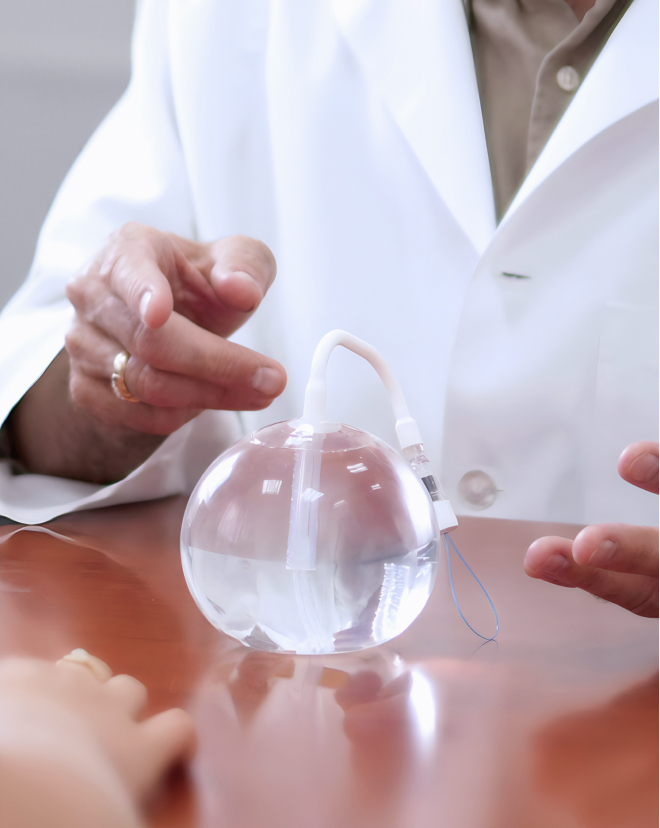
How much weight can you lose with a gastric balloon?
Average weight loss with a gastric balloon is between 15% – 17.7% of your total body weight. Such weight reduction can already bring about a dramatic change to the quality of your life in a short period. Total weight loss will also depend on how well you adhere to dietary restrictions and a fitness regime.
Gastric Balloon Success stories
-

David transformed his life with Spatz3!
With the help of the Spatz3 Adjustable Gastric Balloon, David completely transformed his health and wellness... look at those muscles!
-

Julia lost over 110 pounds!
In only 12-months, Julia lost over 110 pounds with the help of her Spatz3 Adjustable Gastric Balloon!
-

Efi lost over 100 pounds!
After 1-year of hard work and dedication, Efi lost over 100 pounds, completely transforming his health for the future.
-

Rosangela lost over 50 pounds!
In just 12-months, Rosangela lost over 50 pounds to jumpstart her weight loss journey!
-

Martha lost over 60 pounds!
By dedicating herself to the Spatz3 weight loss process, Martha lost over 60 pounds in just 12-months!
-

Angelly lost over 40 pounds!
By dedicating herself to the Spatz3 weight loss program, Angelly lost over 40 pounds in just 12-months!
-

Angela lost over 55 pounds with her Spatz3!
In only 12-months, Angela completely transformed her life by losing 55 pounds!
Who qualifies for a gastric balloon?
Body Mass Index (BMI) is often used to determine eligibility for surgery. Those with a BMI of 27-40 are considered ideal candidates for this program. Use our BMI calculator to understand which BMI class you belong to and if you are eligible for a gastric balloon. Before the process begins, a consultation with a doctor is needed. You’ll discuss your goals and a medical checkup to figure out if this is the right step for you.
¿Am I a Candidate?
The Spatz3 Gastric Balloon is the most effective weight loss balloon in the industry, helping patients reach their weight loss goals
-
Who shouldn't get a gastric balloon?
A bariatric balloon is not suitable for everyone who is overweight. Your healthcare provider will not advise this treatment to you if you have a history of gastrointestinal or esophageal surgery.
Gastric balloon and pregnancy can have an impact on your eligibility. For mothers seeking to get rid of postpartum pounds, it’s strongly recommended to wait 6-12 months. The method of delivery along with nutrient deficiency will factor in the doctor’s decision. It can also be an ideal method of shedding excess weight if you are considering pregnancy. Weight loss with a gastric balloon can help avoid serious complications such as gestational diabetes and postpartum bleeding.
While the likelihood of illness is very unlikely, people susceptible to acute pancreatitis are typically advised against this approach. The difference, however, lies in our methodology – for the pancreatitis and gastric balloon, our stomach balloon Spatz3 can be adjusted to avoid placing too much pressure on the pancreas.

The Gastric Balloon Treatment: How Does The Spatz3 Procedure Work?
The Spatz3 gastric balloon treatment follows six effective steps to ensure you get the most out of your weight loss journey. The initial consultation determines if this procedure is right for you along with discussing benefits, and risks, and outlining what you can expect. Next, some pre-screening assessments will be carried out to ensure that you qualify. This non-surgical procedure will take 15-30 mins and the balloon is inserted endoscopically.
The first 3-5 days post-surgery will see you following a liquid diet and you may experience some slight discomfort. Don’t worry – your consultant will provide you with medication to lessen this. If you are experiencing prolonged symptoms, the gastric balloon can be down-adjusted. And, if you reach a weight loss plateau, the size can be increased so that you can reap the benefits for longer. When you’ve reached the end of your treatment, the balloon can be removed in 15 minutes by endoscopy.
-
1
Preparing For Your Gastric Balloon
You’ve decided that you want a Spatz3 gastric balloon to enrich your life. Preparing for a gastric balloon is done in three stages: Qualification, examination, and implantation.
- Qualification: The doctor must determine if you are an ideal candidate for this treatment. Along with understanding the potential risks associated, the ideal candidate understands that a belly balloon is a springboard for a lifelong commitment to their health. Having an open discussion with your doctor concerning your dedication to healthier eating patterns and sharing your weight loss goals is an excellent way to prepare.
- Examination: Your behavioral and physical profile will be examined for the device to achieve the desired effect. Blood work, chest X-rays and ECGs may be carried out.
- Implantation: If you qualify for the treatment, you will undergo a quick 15- 30-minute procedure. To prevent nausea, you will be asked to not eat or drink anything for 6-12 hours before implantation. Your medical professionals may start you on a course of acid-blocking medication to prevent acid reflux during and after the procedure.
-
2
How is the gastric balloon inserted?
Once you’re sedated and comfortable, the deflated balloon will be inserted endoscopically through the mouth. An endoscope is a thin, flexible tube fitted with a camera. When given the go-ahead from your medical professional, the balloon will be guided down your throat and to your stomach. The endoscopist will fill the balloon with the saline solution once it’s in place. It should reach the size of a grapefruit and will account for one-third of the stomach area.
-
3
Eating after a gastric balloon
As with any treatment, changes will need to be made after your gastric balloon insertion. The first 3-5 days after will consist of a liquid diet, then moving to semi-solid for a week or so. As you adjust to your new intragastric balloon, you can graduate to a solid diet.
A gastric balloon treatment must be supported by healthy eating habits. Calorie-dense, low-nutrient foods and processed products should be rarely consumed.
-
4
How is the gastric balloon removed?
Just like the implantation, gastric balloon removal is an outpatient procedure. In fact, it usually takes less time!
The weight loss balloon will remain in your stomach for 8-12 months. The balloon can be removed on the doctor’s advice or when the treatment program has run its course. Quick, minimally invasive and endoscopic, it follows similar steps to the placement of the bariatric balloon. The balloon is punctured and the saline solution is suctioned through a catheter. The deflated balloon is then withdrawn.
-
5
After the removal
You will be able to resume your usual activities quite quickly after the removal of the balloon. The next day will see you already following a regular diet! Patients need to be mindful that the key to long-term success is consistency and dedication to following the weight loss plan provided by a medical advisor.
-
Challenges with traditional gastric balloons
At Spatz3 our team of medical professionals has found that non-adjustable gastric balloons have two key limitations: Reduced Balloon Performance and balloon intolerance.
-
Loss of Balloon Effect (Reduced Balloon Performance)
On average, gastric balloons become less effective by the fourth month and patients begin to regain weight.
-
Balloon Intolerance
Approximately 1/10 patients experience balloon intolerance. While intolerance is not the norm, early removal/extraction is necessary.

-
-
How Spatz3 overcomes the challenges of non-adjustable balloons
The Spatz3 design overcomes the limitations of non-adjustable balloons with its volume adjustment features. Our Volume-Adjust-Up feature allows patients to increase the volume of the balloon to extend the weight-loss process.
Volume-Adjust-Down targets balloon intolerance. By having the option to reduce the balloon size, the risk of intolerance is alleviated.ז

¿Am I a Candidate?
The Spatz3 Gastric Balloon is the most effective weight loss balloon in the industry, helping patients reach their weight loss goals
-
Why Spatz3 is the best gastric balloon on the market
-
Non-Surgical, Non-Invasive
Skip the surgery with our non-invasive placement method. It’s a short 15-minute procedure with a long-lasting impact.
-
Weight Maintenance
A short-term solution for lifelong weight maintenance. Spazt3 makes sustained success simple. Cultivate a healthier lifestyle with support from medical professionals.
-
Adjustable Gastric Balloon
A one-of-a-kind weight control solution. The market’s only adjustable gastric balloon that can be tailored to reach your targets.
-
Highest success rates
Spatz3 has the market’s highest success rates. With an unmatched 84% success rate -vs 25%-48% industry average-, Spatz3 continues to pave the way for weight loss.

-
-
Gastric Balloon Side Effects and Complications
If you think a gastric balloon is the right option for you, It’s essential to be informed about the potential side effects and complications. The most common side effects include nausea, vomiting, general discomfort and acid reflux. These side effects can have a direct impact on your quality of sleep for the first few days.
Continuing to consume cholesterol-laden foods after operation could lead to digestive blockage, causing cramps and bloating. Smoking and gastric balloons do not complement each other and should be avoided to prevent blood clots, stomach ulcers and reduced healing rate. Travel may also be impacted. Patients should not drive after a gastric balloon if the feeling of nausea persists. Some flyers with gastric balloons have reported cramping and bloating due to changes in altitude.

Gastric Balloon Vs Other Weight Loss Treatment
-
Spatz3 vs Liposuction
Liposuction is a cosmetic surgery. It involves suctioning unwanted fat deposits from specific parts of the...
-
ESG (Endoscopic Sleeve Gastroplasty)
ESG is a weight loss procedure that uses endoscopic suturing to reduce the size and volume...
-
Spatz3 vs Gastric Botox
Gastric Botox is an off-label treatment that involves injecting botulinum toxin into the stomach wall. This...
-
Spatz3 vs Gastric Band Surgery (LAP-Band)
Gastric band surgery is a bariatric procedure for people who are severely obese. A silicone LAP-Band...
-
Spatz3 vs Bariatric Surgery
Bariatric Surgery (also known as Gastric Bypass) involves altering the digestive system to help weight loss....
-
Spatz3 vs Pill
A Gastric balloon pill is an oral, non-surgical weight loss method. The treatment involves swallowing a...
-
Gastric Balloon Vs. Gastric Sleeve Surgery
Gastric Sleeve (also known as sleeve gastrectomy) is a bariatric procedure to achieve effective weight loss...
How much does a gastric balloon cost?
When compared to other bariatric procedures, gastric balloons are the most affordable. The cost of a balloon in the United States ranges between $6,000 – $9,000. This price also covers the cost of removing the balloon. Insertion and removal of gastric balloons are not covered by insurance, usually.
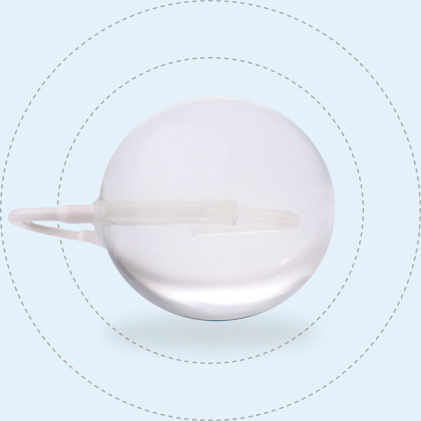
Spatz3: the best Gastric Balloon on the market
We pride ourselves on being the best gastric ballon on the market – our high success rates and unique adjustable method prove that. Spatz3 gives you the support to start the journey, the tools to keep on track and the confidence to overcome your challenges.
¿Am I a Candidate?
The Spatz3 Gastric Balloon is the most effective weight loss balloon in the industry, helping patients reach their weight loss goals
Gastric Balloon FAQs
-
Can you shrink your stomach without surgery?
No. While you cannot shrink the stomach organ, you can however lose body fat with the help of gastric balloon treatment.
-
How common is the gastric balloon treatment?
It is very common. It is a well-known short-term treatment for obesity. Intragastric balloon treatments have become one of the most common bariatric procedures.
-
Are gastric balloons safe?
Yes, intragastric balloons are safe. But as with any medical procedure, there are risks associated. Spatz3 weight loss balloons are FDA-approved.
-
How long does the gastric balloon procedure take?
The gastric balloon procedure takes 20-30 minutes. It is an outpatient procedure, meaning that you can return home that same day.
-
Where can I get a gastric balloon?
Spatz3 adjustable gastric balloons are available worldwide in the USA, Europe, Latin America, Asia and the Middle East. Find your nearest clinic here.
-
How long do the effects of the gastric balloon last?
Gastric balloons are a short-term solution that provides you with the kickstart to make long-lasting changes. The balloon can remain in place for up to 12 months. Combined with dietary changes, exercise and commitment, the effects can be life-long.
-
Read more about gastric balloon
- Gastric Balloon vs GLP 1 Agonist
- Gastric Balloon VS. Weight Loss Injections
- Gastric Balloons and PCOS: A Comprehensive Guide
- Gastric Balloon Vs Tummy Tuck
- Gastric Balloons And Fat Burning Goals: Is There A Connection?
- Gastric Balloon and Cholesterol
- Mindfulness And The Gastric Balloon
- How Many Calories Should You Eat With Your Gastric Balloon?
- Life After Spatz Gastric Balloon Up-Adjustment
- Gastric Emptying and Its Correlation With Weight Loss and Body Mass Index in Patients With an Intragastric Balloon
- A slowdown in average BMI in high-income countries
- What kind of Exercises can I do with the Gastric Balloon?
- Gastric Balloon and Constipation
- Can Gastric Balloons Lead to Iron Deficiency?
- What are the Differences between Spatz3 and other Gastric Balloons?
- Gastric Balloons and Hair Loss
- Acid Reflux And My Weight Loss Balloon
- Can I Drink Alcohol With a Gastric Balloon?
- Is Obesity a Risk Factor for Cancer?
- Gastric Balloon Vs. Gastric Band
- Does A Gastric Balloon Affect Breastfeeding?
- Can I Drink Coffee after a Gastric Balloon?
- How Much Do You Have to Weigh to Get a Gastric Balloon?
- Is there an age limit for a gastric balloon?
- Can Your Body Reject a Gastric Balloon?
- Who is Not a Candidate for Gastric Balloon?
- What Can You Not Eat With a Gastric Balloon?
- Can You Work With a Gastric Balloon?
- Is It Safe to Fly With a Gastric Balloon?
- Is It Safe to Drive After my Gastric Balloon Procedure?
- How Do You Sleep After a Gastric Balloon?
- Gastric Balloon Removal Cost
- Gastric Balloon For Weight Loss
- Gastric Balloon Pros And Cons
- Gastric Balloon Vs. Gastric Sleeve Surgery
- Gastric Balloon Vs. LAP Band
- Gastric Balloon Vs. Pill
- Gastric Balloon Vs. Bariatric Surgery
- Gastric Balloon and Liquid Diet
- Gastric Balloon and Food Restrictions
- Gastric Balloon and Pancreatitis
- Gastric Balloon and Pregnancy
- Gastric Balloon and Smoking
- Gastric Balloon Vs. ESG (Endoscopic Sleeve Gastroplasty)
- Gastric Balloon Vs. Gastric Botox
- Gastric Balloon Vs. Liposuction
- How to Prepare for a Gastric Balloon
- Is Gastric Balloon Covered by Insurance?
- Gastric Balloon Diet: What to Eat Before, During, and After
- How Much Does A Gatric Balloon Cost?
- What Are The Most Common Gastric Balloon Side Effects?
- Benefit - Non-Surgical / Non-Invasive
- Benefit - Weight Maintenance
- Benefit - Weight Loss Success Rates
- Benefit - Adjustable Gastric Balloon